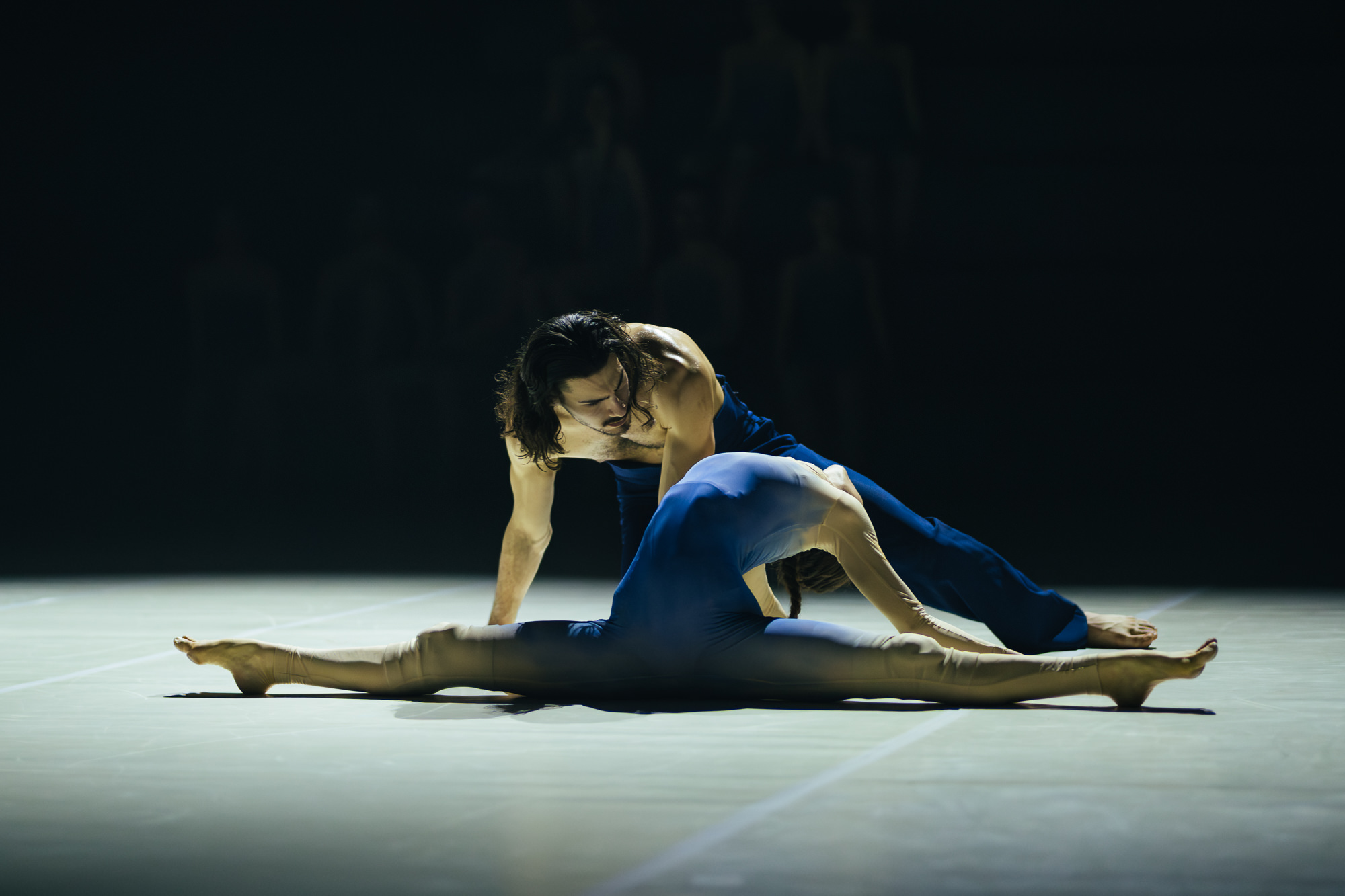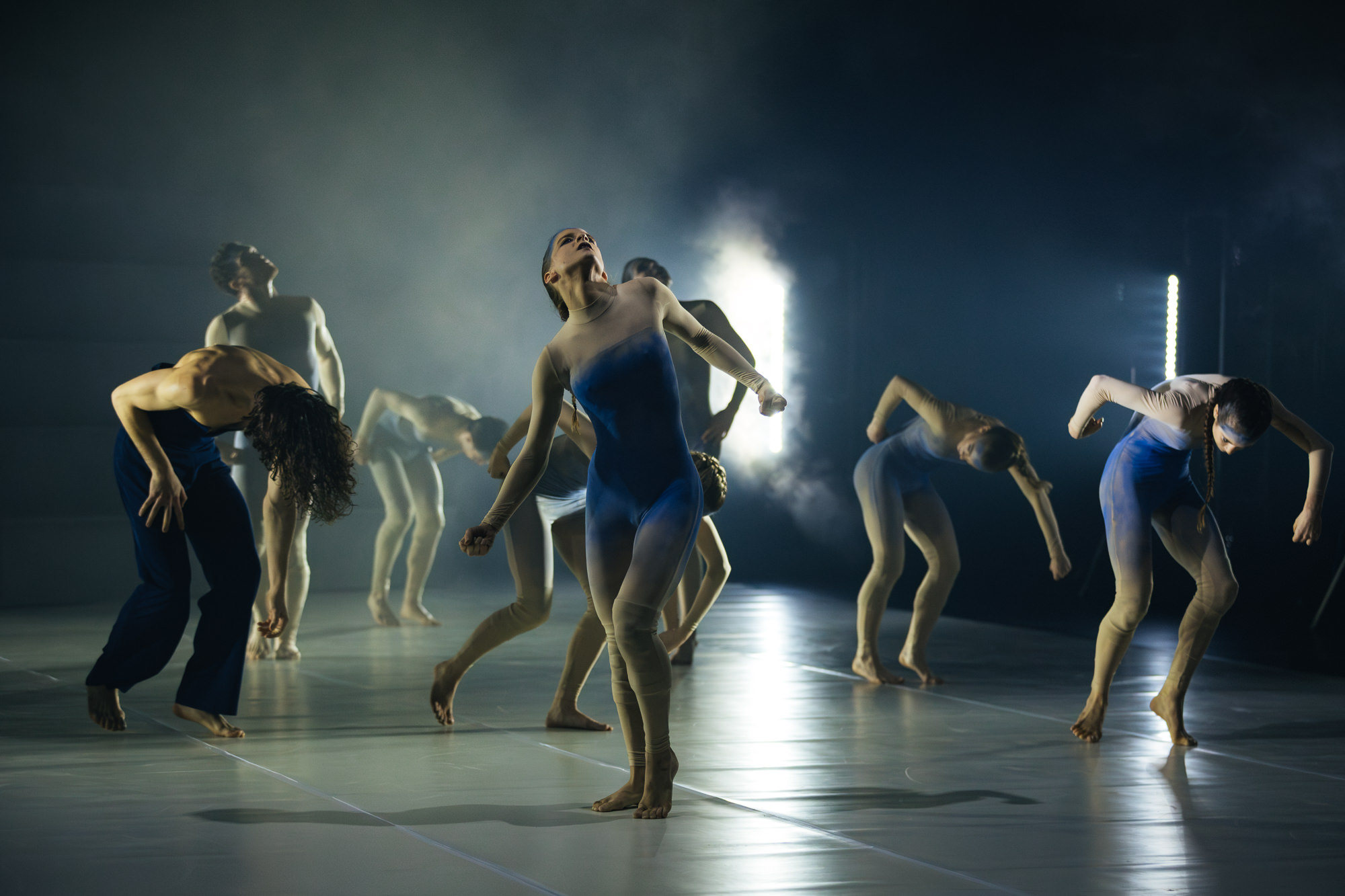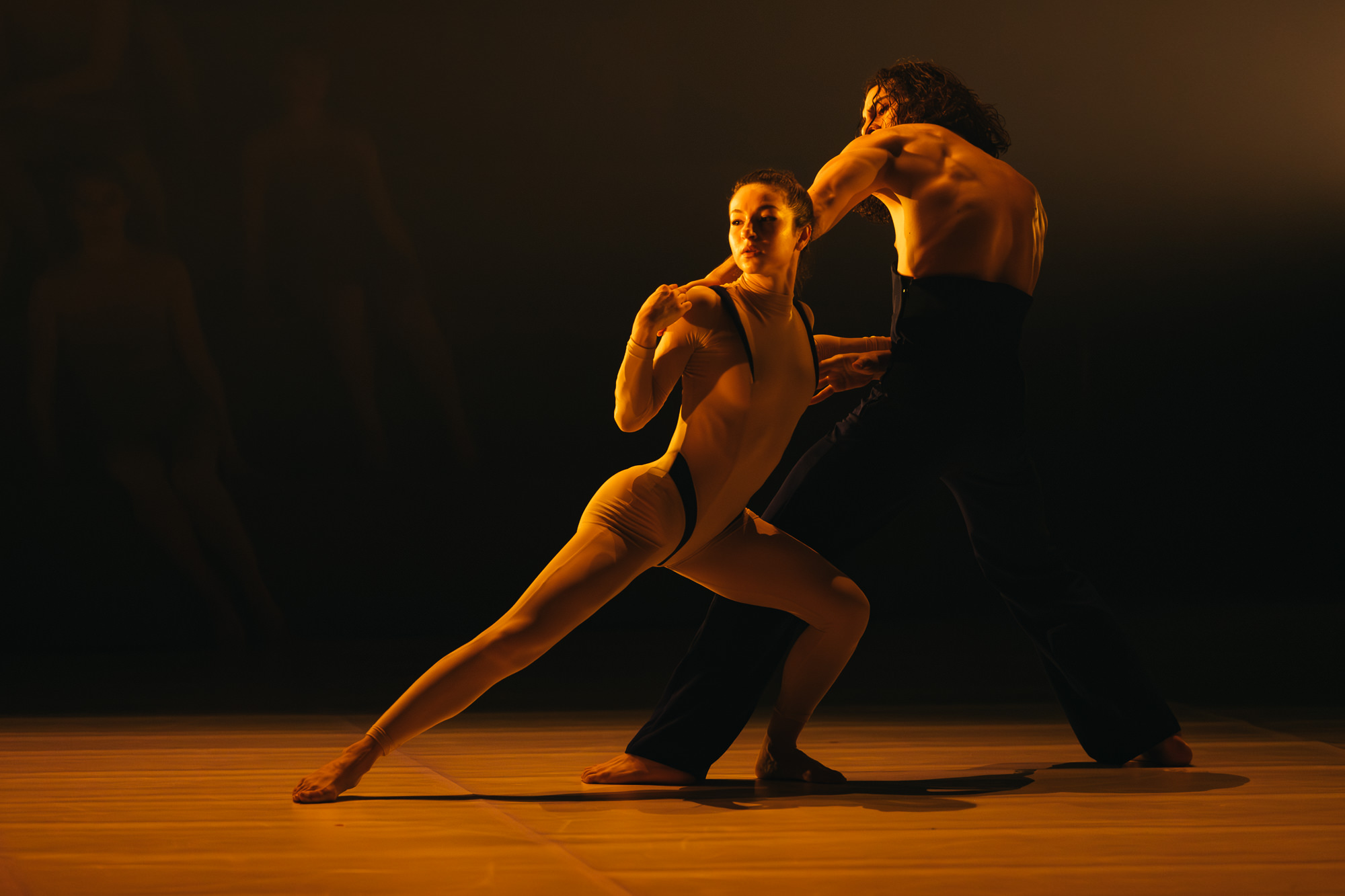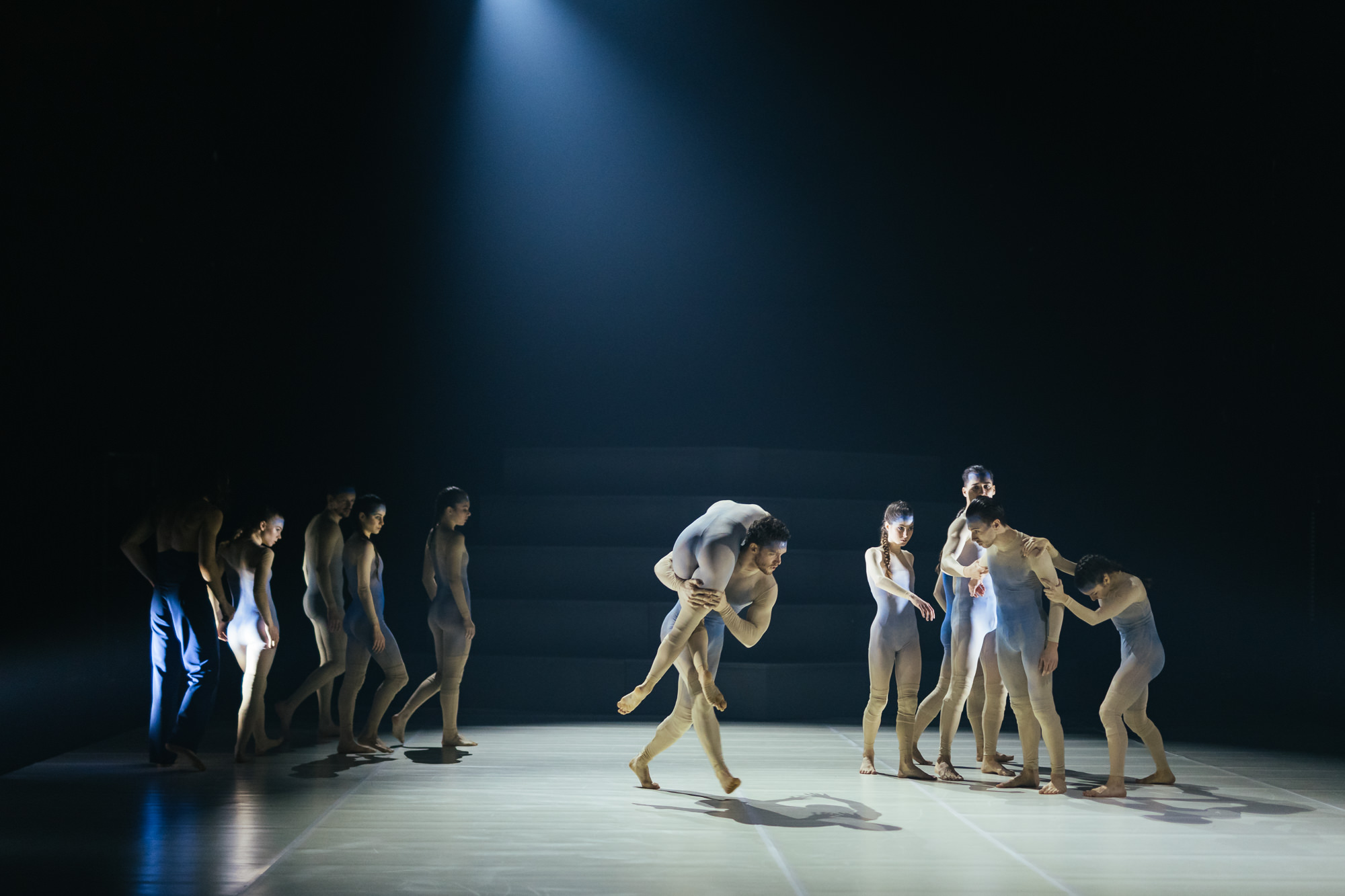
Co-production of Szeged Contemporary Dance Company and the National Dance Theatre Budapest:
DIVINE COMEDY
· dance play in three acts inspired by Dante ·
The source of human unhappiness lies not in external forces but within our own functioning: in conflict, competition, and the desire for possession. An imaginary journey through different states holds up a mirror to us and asks how we might live differently.
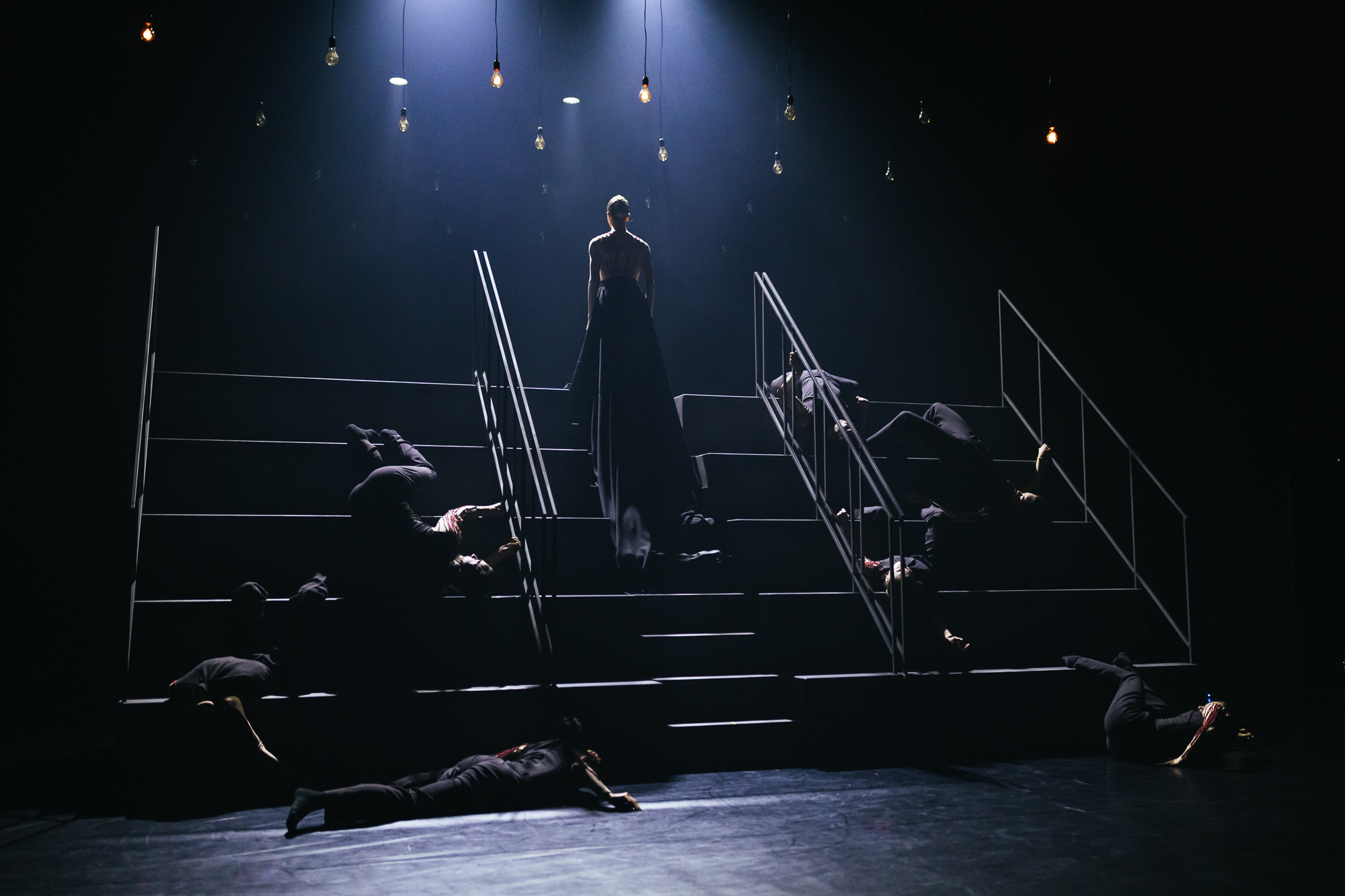
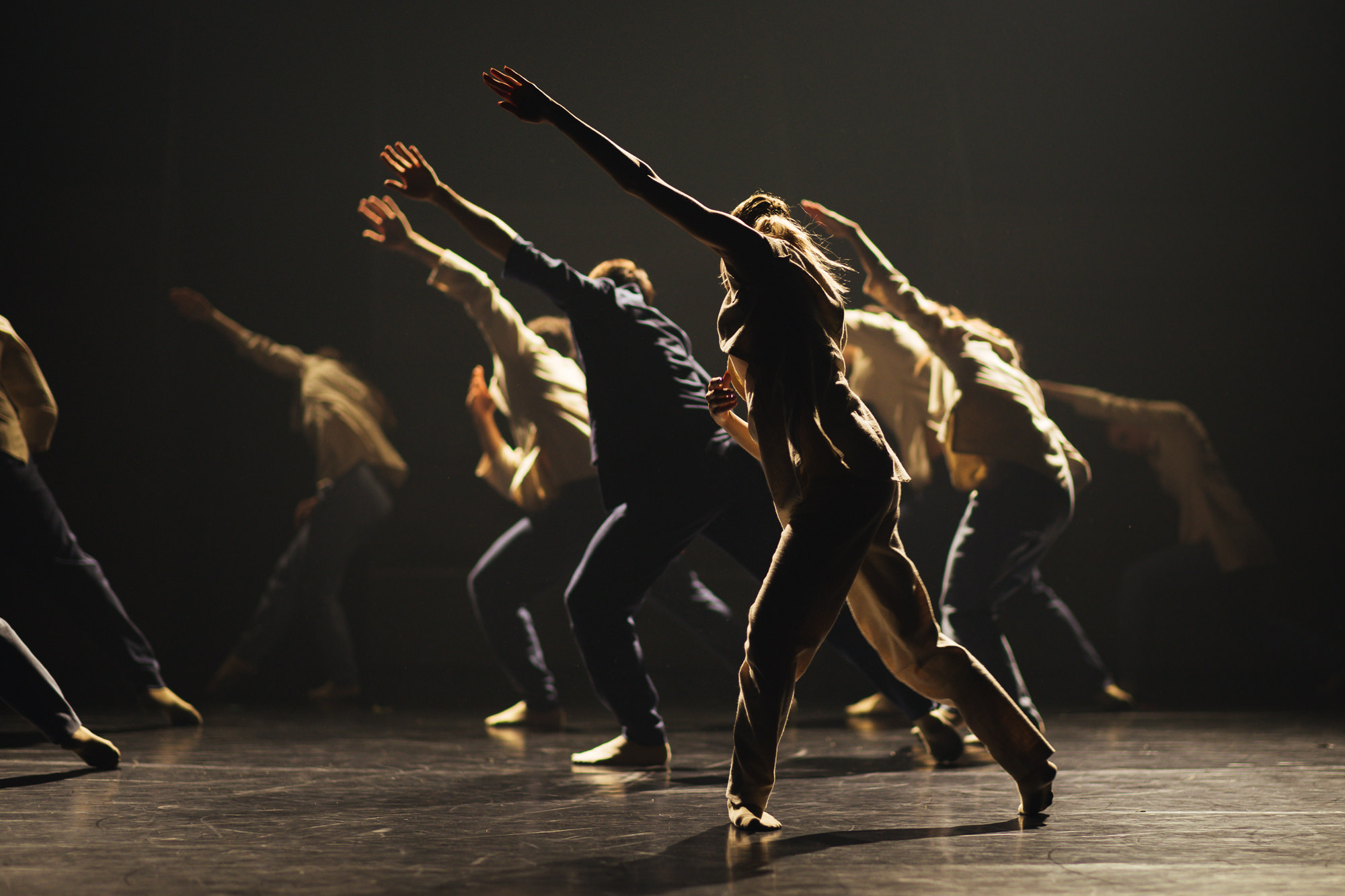
Our three-part dance piece leads from chaos, through transition, toward a possible order. It does not tell a story but follows an inner process: from the recognition of mistakes to the possibility of change. The focus is on the here and now – on what happiness means today.
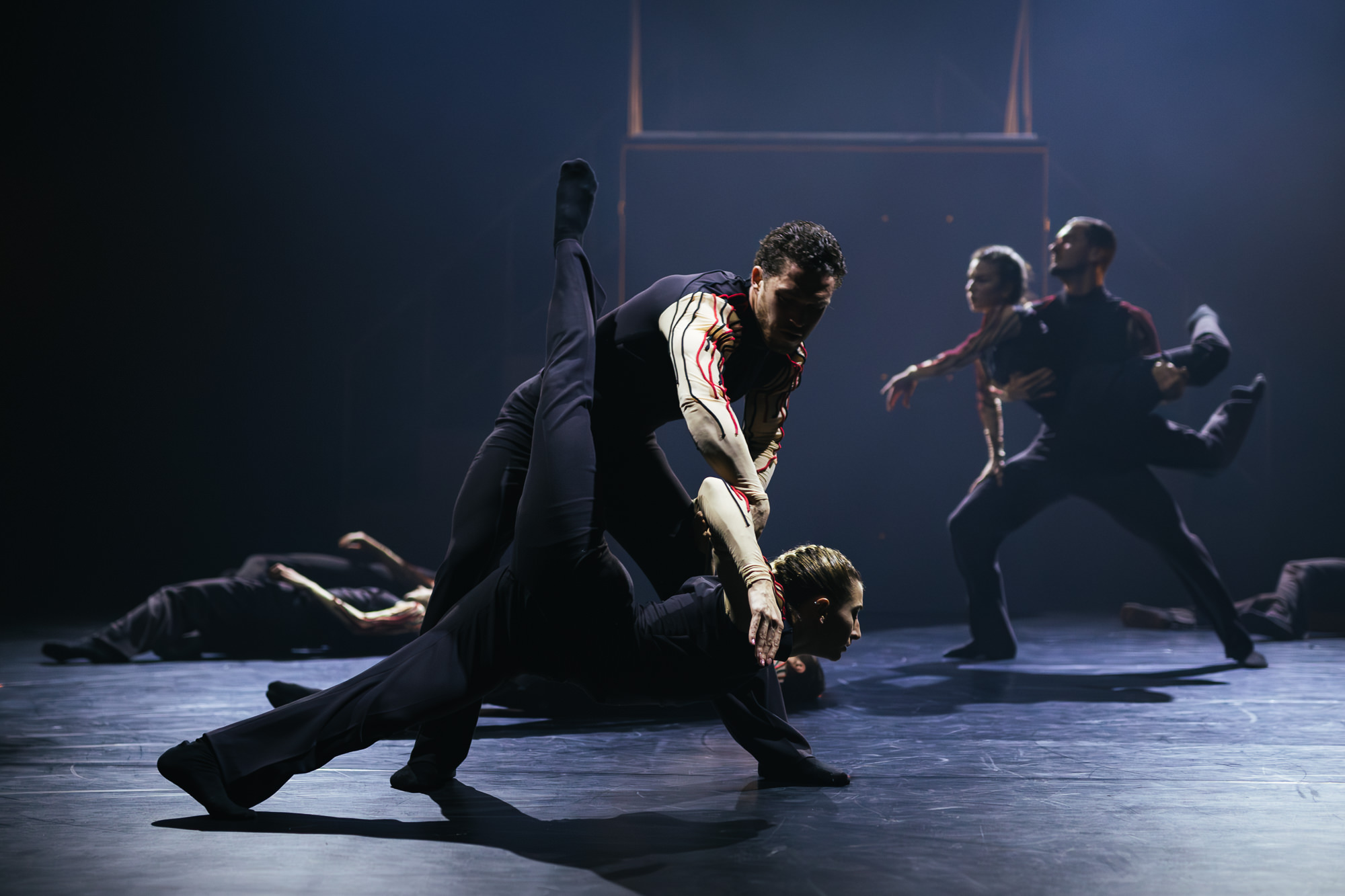
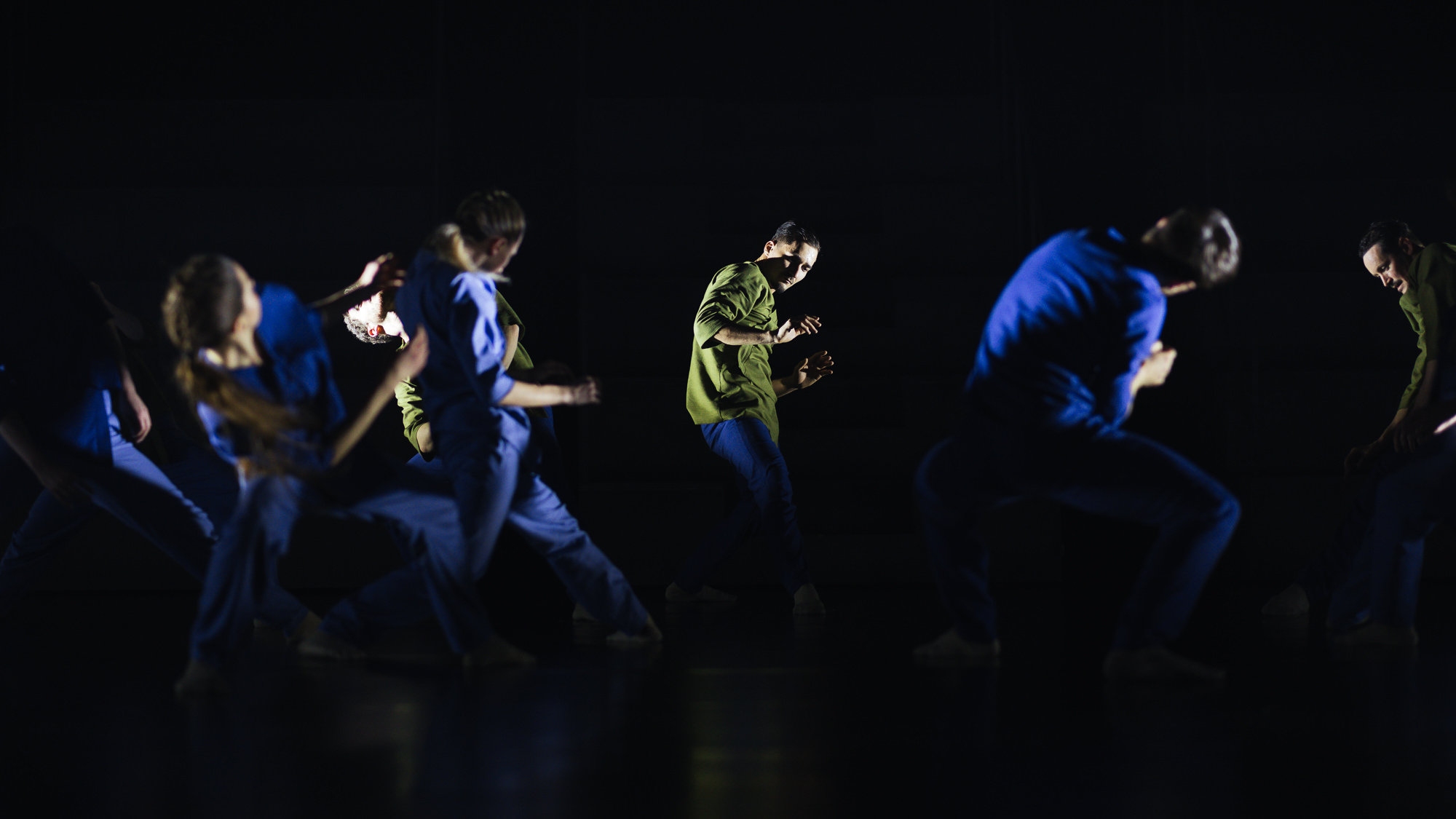
INFERNO – The Modern Chaos
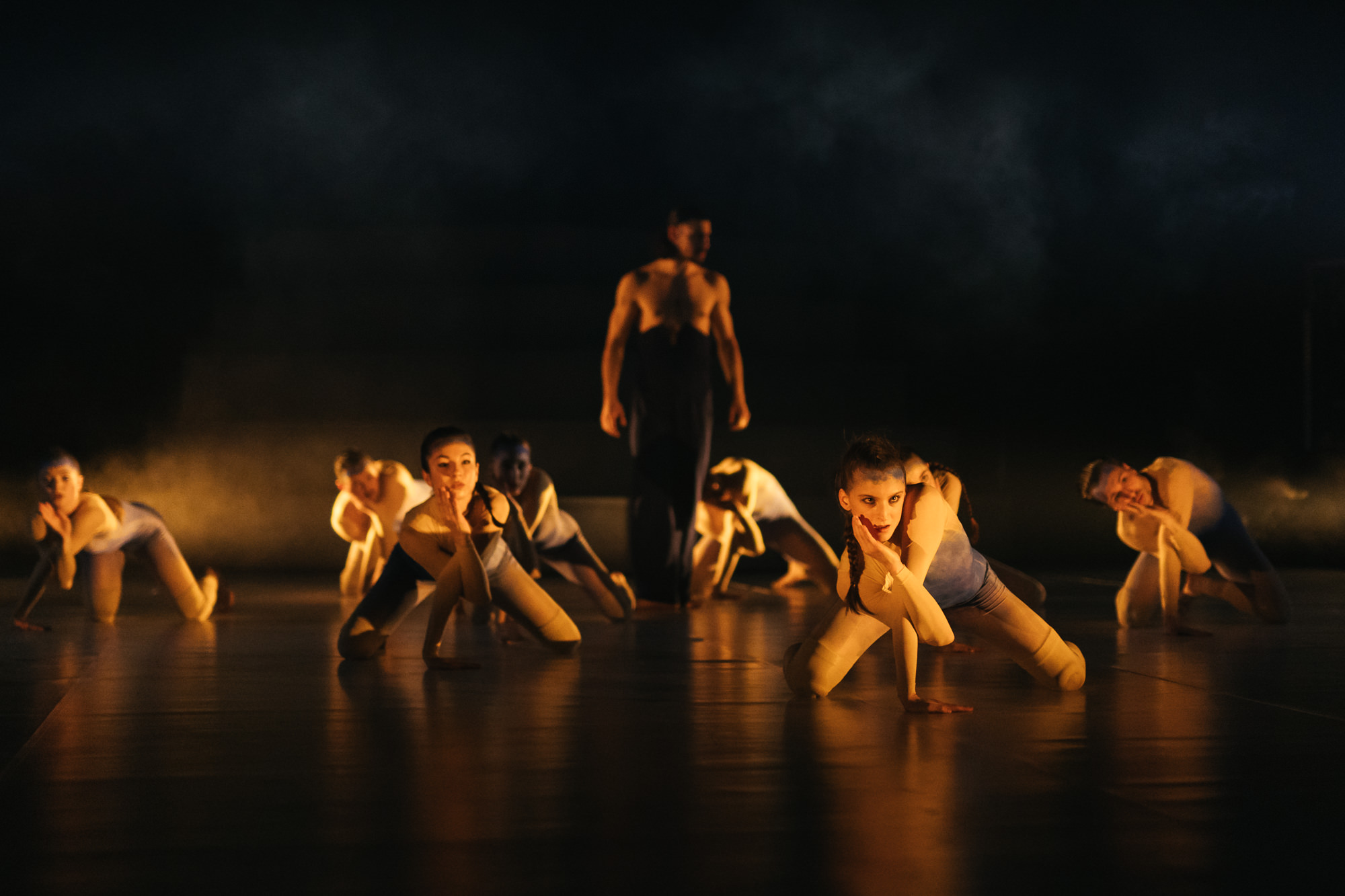
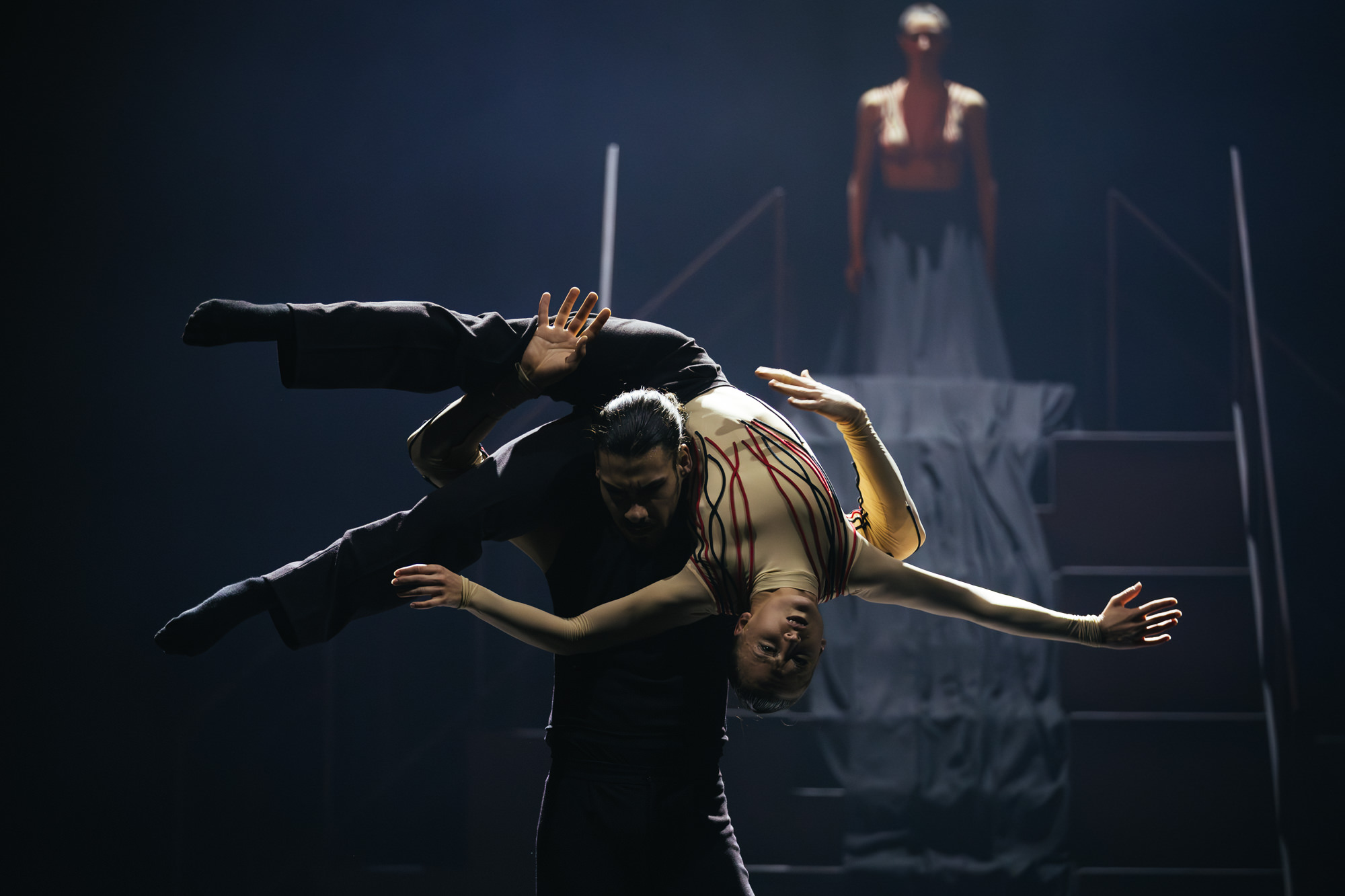
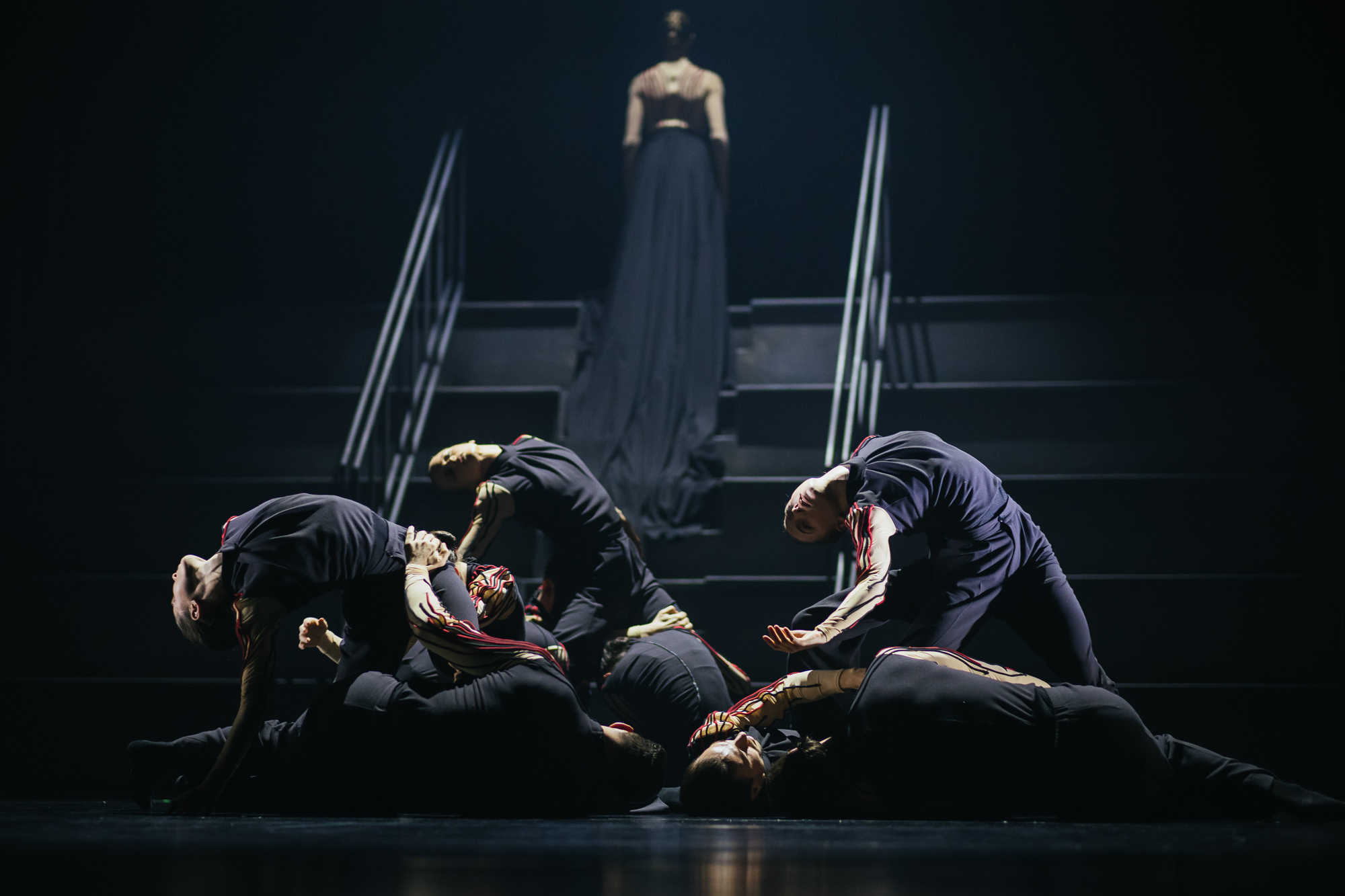
“Inferno is the space of loss and disorientation, where the individual gradually loses connection with themselves in the noise of the world. Connection is constant, yet the experience is one of deep, shared loneliness. Bodies move within the dynamics of collision, rejection, and merging, repeating cyclical patterns that never lead to genuine connection. Every gesture is born from social pressure, arising from the need to belong somewhere and to become visible, in a constant conflict between external image and inner reality.
This Inferno is not a place of punishment but of consumption: a silent chaos in which identity shatters into fragments and dissolves, reflecting the condition of contemporary human existence.”
Giovanni Napoli
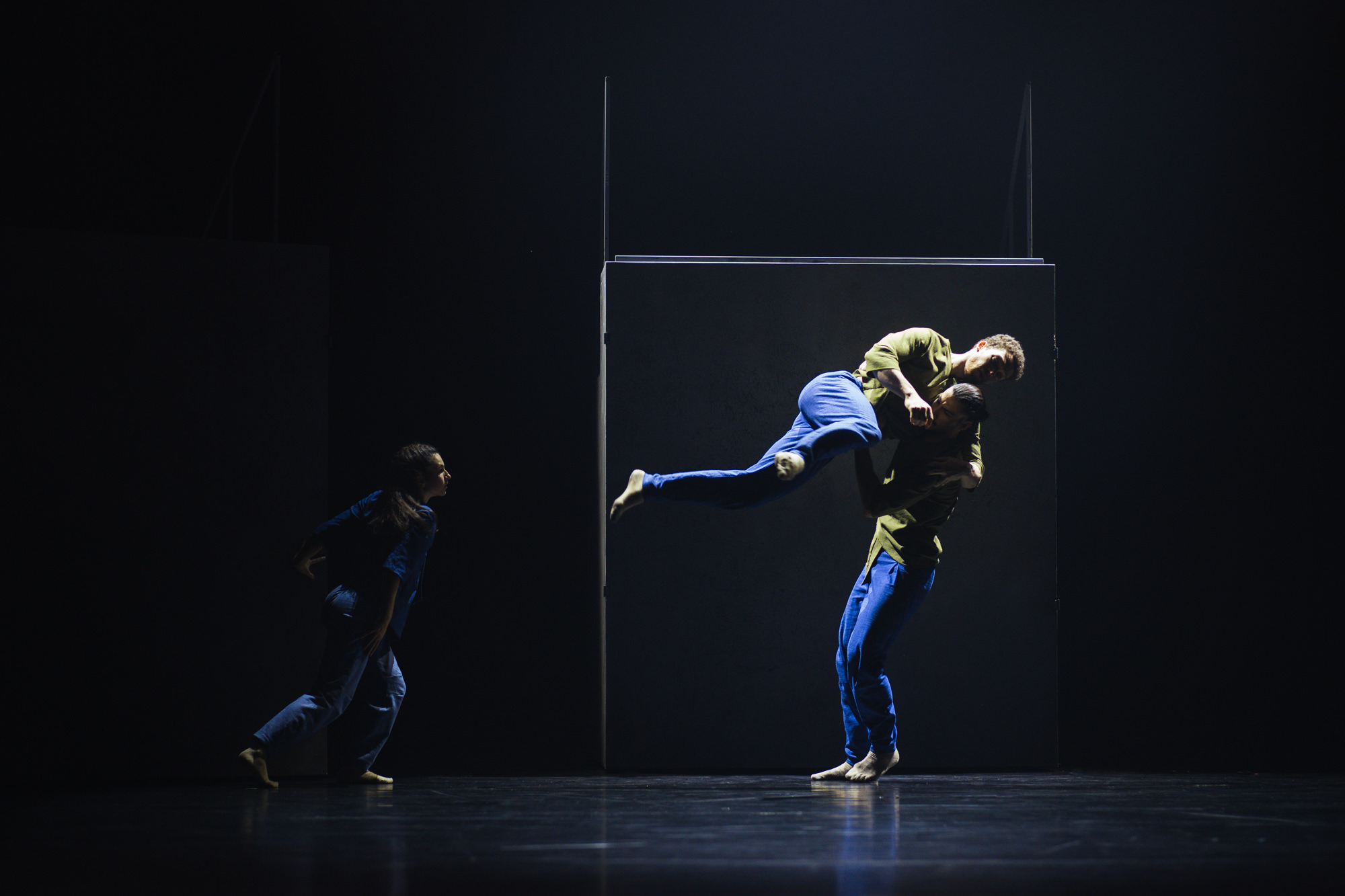
PURGATORIO – The Quarantine of the Soul
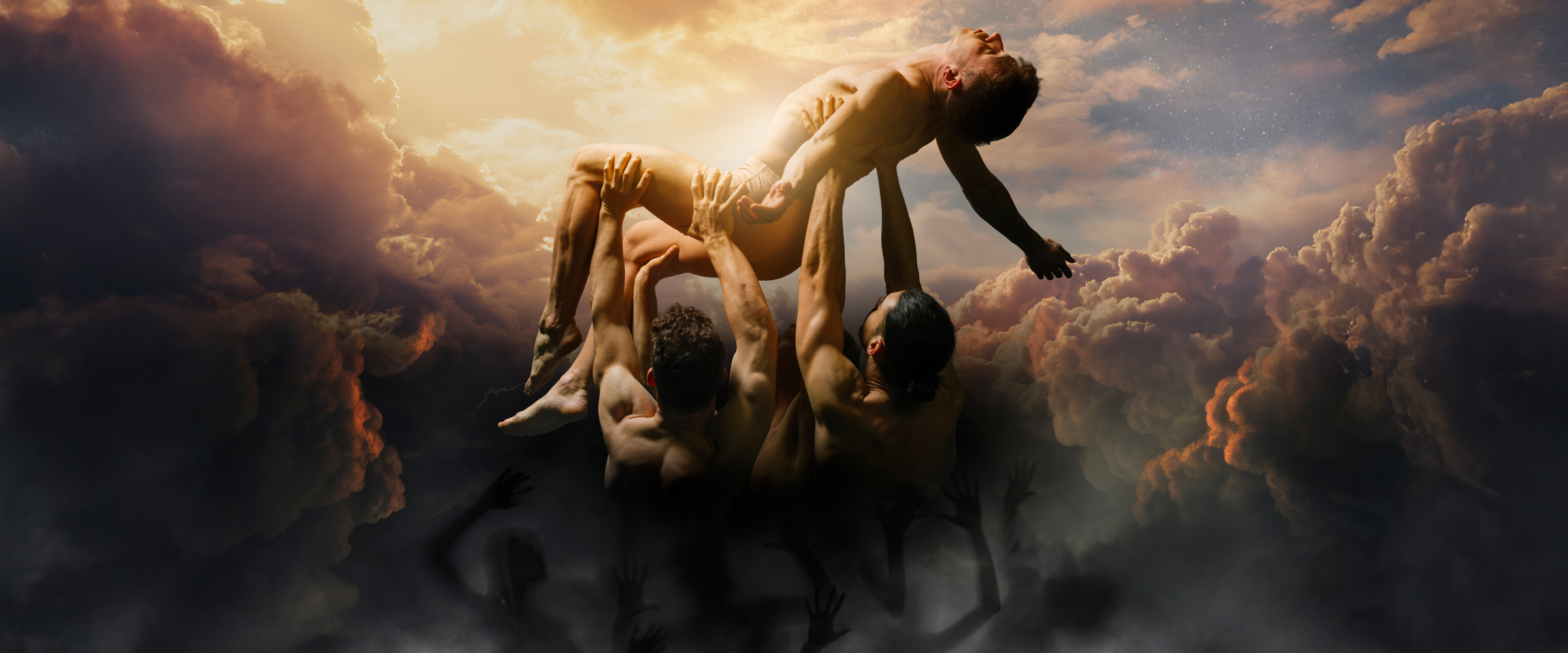
“Souls transform through the embodiment of the seven deadly sins, inhabiting them as lived experiences. Each sin becomes a form and a passage – a necessary threshold leading toward awakening. A person experiences them within their own body: encountering them, passing through them, and being shaped by them, until what was once shadow becomes understood and transcended. Here sin is not rejected but confronted, explored, and ultimately transcended as an experience.
Only then does the light guide one onward toward Paradiso, where transformation becomes complete and turns into ascension.”
Thomas Martino
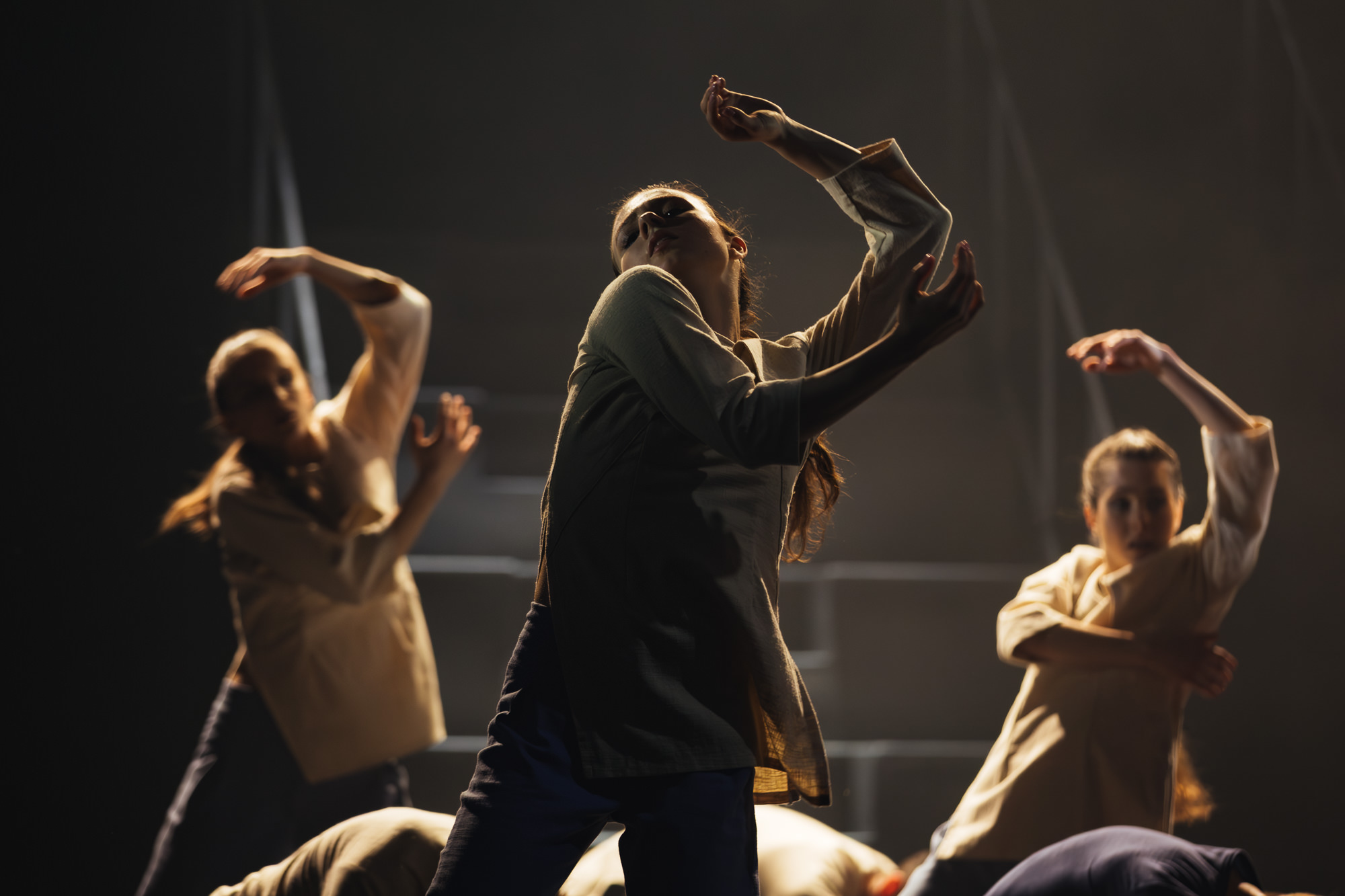
PARADISO – The Approved Reality
“The concept begins with a rethinking of Paradiso on a human scale. It does not view it as a transcendent place, but as a possibility that exists within us: a state that emerges as a result of our decisions and attitudes. Just as we are capable of shaping our world into a hell for others – or for ourselves – we must also be capable of creating the reality of harmony, love, and a paradisiacal existence in our present, a state that may not be eternal, but can be evoked again and again through experience and learning.”
Gergely Czár